User testing is expensive. Designers, researchers, product managers, or developers are often tasked with user testing on limited budgets. As a designer, I’ve worked on numerous projects under similar constraints and I’d like to share some tips and tricks I’ve learned throughout the years.
Though I’ll focus on testing methods for digital products, the general concepts can apply towards services or physical products. The goal is to show ideas to users early to evaluate, iterate, and validate assumptions.
What is user testing?
User testing, also known as usability testing, is a process that identifies product issues by testing it with real users. User testing has roots dating back to World War II where testing was used to improve military equipment.
Steve Krug’s further popularized user testing across the industry. Nowadays usability methods have been made available beyond the traditional confines of military, academia, and corporate R&D labs. If you’re interested in the history of user testing, check out .
Why do you need to do user testing?
Its a lot cheaper to catch potential problems early within the product development life cycle. Tech companies typically follow an agile workflow that looks something like this:
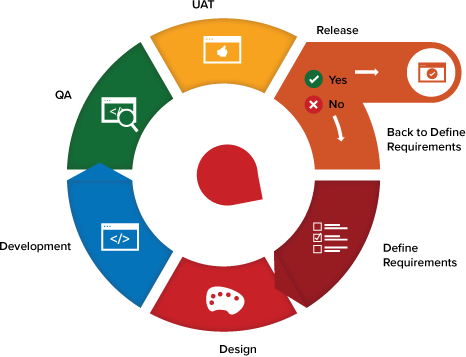
This graph represents how projects are passed through teams across the company. Product Managers start by defining product requirements that are passed along to the UX team. After finalizing design, the product moves through Development, QA, UAT, and Release Engineering. This cycle repeats itself in an iterative manner until the final product is complete.
Designers who rely on intuition and assumptions alone must wait until the release of each cycle to gauge feedback, potentially wasting a lot of resources. Reversing the damages of poor user experience is an expensive and arduous process. Once layout and patterns are established, designers must thoroughly capture evidence of poor usability and convince others to implement new patterns.
“If you think good design is expensive, you should look at the cost of bad design” — Ralf Speth
User testing was developed as a quick and inexpensive solution to mitigate some of these risks. You can validate assumptions, steer product and design direction more confidently, and uncover hidden issues using actual user feedback. With that said, user testing has limitations due to the artificial testing environment and small sample of users. It will never substitute feedback from released products where mass users are engaged with real data.

No comments:
Post a Comment